5.4K
Downloads
14
Episodes
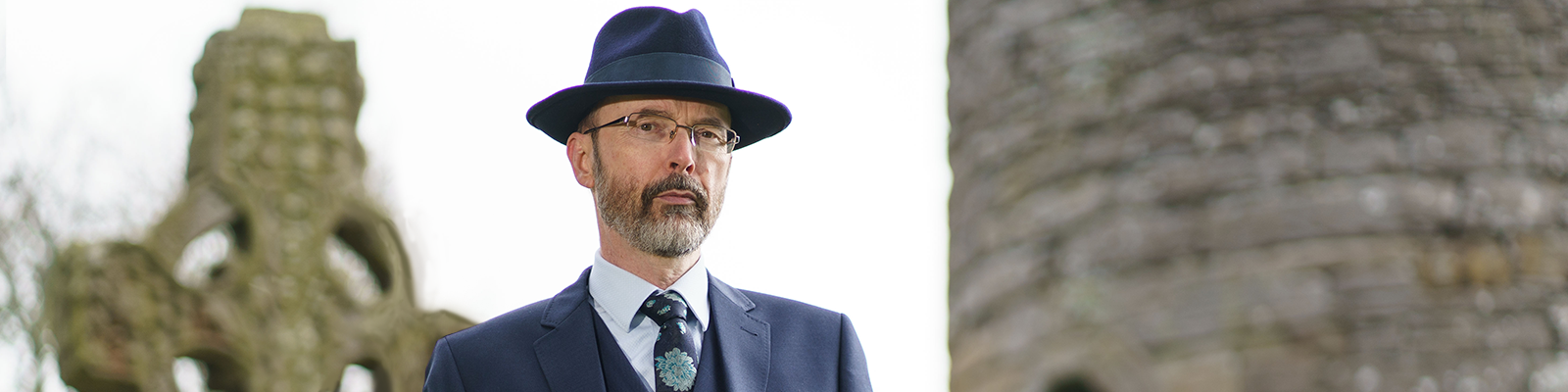
Secular support, comfort and hope for people trapped within or leaving behind religious beliefs. A non-judgemental space for people born into a religion who are questioning their religious faith or who feel under pressure to ’keep the faith’ or remain within a religion or vocation they are losing their belief in. Encouraging people to think for themselves, trust themselves and respect their doubts. Life is short. Be you. Be free. Joe the Human Substack: https://joearmstrong.substack.com/ Joe Armstrong website: https://joearmstrong.ie Twitter @LosingMyRelig1 https://www.youtube.com/channel/UCbfcXAPkTT401BZuQgYSGCA Signature tune © www.louisebyrnemusic.com Photo of Joe Armstrong © Fran Veale
Episodes
Oct 7, 2024
Oct 7, 2024
39 min
Journalists too often park their critical faculties when reporting on a religious story. They will report a 'miracle' as if it was a fact, whereas if even one actual miracle was verifiable, universities throughout the world would be studying such an alleged setting aside of the laws of physics.
Nor should journalists give a free ride to priests, clerics or other religious leaders saying unverifiable nonsense like 'God says' or 'God told me'. Even milder versions like 'the Church teaches' must be challenged. The Church taught things in the past that it now knows are laughable and ridiculous.
Journalists shouldn't be mouthpieces for the Big Lie of religion. They shouldn't collude in the Big Lie or allow professional religious people to speak nonsense without challenging them.
Any school which claims to teach religious education but which then sees all or most of its pupils take first holy communion and confirmation has not engaged in religious education. It had indoctrinated children into a particular faith.
People now realize that it was wrong of society in the past to allow priests, nuns and lay teachers to beat children in schools. They know that that it was wrong to turn a blind eye to the sexual abuse of children. But as a society or a species we have yet to awaken to the harm done to children's minds and thinking to indoctrinate them into a religion. It is child abuse to do so. We have awoke to abuse of the body through corporal punishment, abuse of the dignity of the child by child sexual abuse. But we have not yet awoken to the violation of the human rights of a child to learn to think for themselves by indoctrinating them into religions.
Journalists must do far better than many currently do. They must interrogate the dogmas, myths and nonsense held as true without a shred of evidence that permeates society.
They should not be intimidated by not having a degree in theology. As I mention in this interview, conducted by Gerard Conningham on the Freelance Forum Podcast, and reproduced in the Losing My Religion - Trust your Doubt podcast, theology is the only 'oly' about something that doesn't exist.
Jul 8, 2024
Jul 8, 2024
22 min
Pat Byrne interviewed me last Thursday, 4 July, 2024. We discuss my dream of becoming a priest when I was an adolescent: ‘Doctor, teacher or priest? I decided to do the best of them all: become a priest!’
We chat about married priests, and coming to the realization that the Catholic Church would never allow its priests to marry. And my shock of realizing the Big Lie of all religions. And how losing religion and finding myself has been the story of my life.
We also discussed the vow of obedience. ‘It was almost harder than celibacy. With the vow of obedience, you are expected to believe that the decision the Superior makes is the will of God.’
I decided that didn’t make any sense. They were fallible human beings. Yet their decisions could be detrimental for me or anyone. You know yourself better than anyone else. I know myself better than anyone else knows me. Yet you’re expected to believe that their decision is the will of God?
I speak about the benefit of studying philosophy and theology. It gave me the intellectual basis for my non-belief. For instance, the first resurrection story in the earliest canonical Gospel, the Gospel of Mark, had no account of the ‘Risen Jesus’. It was added years later.
I personally came to my honest judgement that religion is a Big Lie. I felt resentful that I had been indoctrinated into religious belief as a child.
I never wanted to be a teacher and certainly not as a priest. I couldn’t see the point of being celibate, obedient and poor in order to teach! There were lots of excellent lay teachers out there.
But after nine years in a seminary you’re not qualified to do anything. Ironically, I went into teaching and taught religious education. I loved that there was no attempt to inculcate faith in the London school where I taught. It was about teaching pupils to think for themselves.
We discussed my move to England, meeting Ruth and falling in love. We’re married now more than 30 years. And I’ve written a song about losing religion and finding myself and the love of my life: So Glad I Married You.
My documentary on RTE, From Belief to Unbelief, was 40 minutes. Afterwards, I realized I couldn’t tell my story in so few minutes. So I wrote two memoirs In My Gut I Don’t Believe and Saved By A Woman. Then I wondered if I could share my story in a more compact way, so I wrote a song about it.
I wrote it with The Rayne and Andrea Patron. The first verse tells the story of my seminary years, which, in my first memoir, took over 80,000 words. The second verse, in one compact verse, tells the story of my next six years, that took me another 80,000-plus words in my second memoir. That one is about meeting Ruth.
I found it very emotional when I first heard The Rayne singing it.
‘And,’ interjected Presenter Pat Byrne, ‘it will touch deep inside a lot of people, I’m sure, because it’s an absolutely beautiful song.’
Pat finished the interview by playing our new song. Hope you like it.
Click here for Spotify Link to So Glad I Married You
Click here for YouTube Link to So Glad I Married You
Click here for iTunes, Apple Music and Deezer links to So Glad I Married You.
Apr 19, 2024
Apr 19, 2024
57 min
Author Joe Armstrong is interviewed by Scott R. Stahlecker, host of the leading YouTube channel Atheist View: Life without Religion
(https://www.youtube.com/watch?v=n7mNYXFXuBg).
We talked about Irish rock legends U2. Joe sings Molly Malone! Both Joe and Scott are former committed Christian ‘pastors’ who no longer believe in God.
They discuss the negative view of self that’s inculcated from childhood by Christianity, with its emphasis on sin and the supposed need to be saved. They chat about Catholicism and Protestantism in Ireland and the time of the Troubles in the North of Ireland.
The association between theatre and liturgy is explored, and the Catholic liturgy’s appeal to the senses of sight, hearing, touch, taste and smell. The Catholic charismatic renewal of the 1970s is discussed, and its exploration in Joe Armstrong's first memoir In My Gut, I Don’t Believe.
His Uncle Father John Armstrong’s ‘faith story’, his contracting TB and spending 11 years in hospital and then becoming a Catholic priest. The impact of his story on Joe as a young boy and adolescent and their mutual regard.
Joe discusses his difficult relationship with his mother and yet how well she took his decision to leave the priestly path after nine years.
Ireland is compared favourably to MAGA and bible-belt America, with today’s USA having much in common with a past, theocratic Ireland. Whereas Ireland is on an educated, compassionate secular trajectory, America seems to be regressing towards a theocracy.
20 young men joined the Marists Fathers in Dublin in 1980 but, one by one, 17 of them left, before or after ordination. Joe retain good relationships with some former Marists, with two of them attending the recent launch of his second memoir, Saved by a Woman.
They discuss the negative view of Catholicism towards sex, sexuality and the sexual impulse; and the continuum between heterosexuality and homosexuality and how relatively few people are 100 per cent heterosexual or 100 per cent homosexual.
The negative view of women within Catholicism is addressed, with the belief that the ‘first woman’ Eve brought sin into the world and the myth that Mary had herself to be conceived ‘immaculately’ and then she, supposedly, conceived Jesus without having intercourse with a man, retaining her virginity ‘before, during and after’ his birth. (How can a baby be born without the hymen being broken? Or conceived without human male semen?)
Joe is glad he studied theology. It gave him the intellectual basis for his atheism. He says: 'My faith was always predicated by an ‘if’: ‘If’ God exists, it’s got to make a difference in your life. If it’s true, it’s got to make a radical difference to our lives. But it was always ‘if’.'
There is no resurrection account in the earliest form of the earliest Gospel, the Gospel of Mark. What we read of supposed ‘resurrection appearances’ was added many years after the supposed ‘events’ it ‘reports’ upon.
A crunch point for Joe was that the Church teaches a vocation comes from God. 'I was called to diaconate and they suddenly changed the rules in the Vatican about when ordination was to take place. Formally called by the congregation to diaconate, that then had to be put on hold for five months because of the new rules. I wondered if God had called me when the congregation originally called me or if God had changed His mind in light of the new Vatican rules!'
'The second thing that showed me that religious faith was a Big Lie was that the Church admitted that compulsory celibacy for priests was a manmade rule. Yet it elevates its manmade rule over what it claims to be God’s call to the priesthood. Once a priest, always a priest in Catholic theology. Paedophile priests, insane priests, murderer priests all remain priests to their dying day. Yet the Church stops good priests from exercising their priesthood merely because they fall in love and marry someone.'
Once you discard or outgrow your God belief, you realise this is your one and only life. Joe says: 'I felt angry when I realised that I had been taught, believed and lived the Big Lie of religious faith.
'I’ve sometimes asked priests or nuns what if, at the end of their lives, they realised it was all BS, and that they devoted their lives to a delusion. Many know or suspect that they have. But the longer the stay and the older they get, the harder it is for them to leave.'
Scott and Joe discuss how religious belief can be stifling. Joe: 'I realised I couldn’t stay because I’m a writer. I couldn’t be a writer and be a priest, having to follow the party line, being unable to express my honest thoughts, judgements and creativity.'
'Writing my memoirs was primarily to help me to understand myself,' he says. He speaks about his finalist award-winning RTE documentary, From Belief to Unbelief. 'Doing the documentary was cathartic. Afterwards, I knew there was so much more for me to explore that I needed to write a memoir. My first memoir explored Catholic Ireland from the 1960s to 1980s, including my experiences of nine years in the seminary.'
Joe discusses his decision to leave the seminary after five years but being persuaded to stay. 'I wasn’t, at 23 years of age, strong enough to leave.'
He shares about his experience of counselling and being unable to get out of his head. 'I was stuck on a fence. My counsellor said, Get out of your head. This moment, in your gut, do you believe?'
Despite his realisation that deep down he did not believe, when he finally left after nine years he wasn’t automatically an atheist.
'I was sure that leaving was my decision. And I built my life on that. But, having left, my head was still full of religion.
All notions of God are manmade. Scott and Joe praise the physicist Brian Cox. Scott has recently discovered him. Says Joe: 'We are conscious matter. We exist for a momentary second in relation to the age of the universe. It’s exhilarating and exciting. It’s far better than made up stuff about Gods. And it’s devoid of all the negativity and mind-warping of religion.'
They discuss the peculiar belief that religion is the basis of morality. Joe asks: 'Would religious people go out and rape, murder and pillage if they didn’t believe in God? It’s pathetic if their fear of God is their only reason for being good.'
They also note that there can be toxic religious people and toxic non-religious people and that Humanist organizations, just like religious organizations, can become autocratic. Joe suggests there’s an interesting historical comparison to be made in the origins of the priesthood within Christianity and the origin of celebrants in Humanist organizations.
Here is the link to Scott’s YouTube interview with me (if you'd prefer to watch it than listen to this podcast): https://youtu.be/n7mNYXFXuBg?si=6p-_QIZGgQdDnTrV
Scott Stahlecker is an author, musician, and host of the YouTube channel The Atheist View: Life without Religion. He is the author of three books: the memoir Picking Wings Off Butterflies, the novel Blind Guides, and a self-help guide, How to Escape Religion Guilt Free. An avid musician and multi-instrumentalist, he has recorded and produced two CDs: Rainforest Dance and a self-titled debut. He also serves on the board of the Clergy Project, a nonprofit organization based in the United States that provides peer support to current and former religious leaders who no longer believe in a god.
Scott’s YouTube channel: Atheist View: Life without Religion
https://www.youtube.com/channel/UCwuBjzBcGguFdkdTGZjCQww
Scott Stahlecker Music:
ITunes: https://music.apple.com/us/artist/scott-stahlecker/467447714
Amazon: https://music.amazon.com/artists/B005OXS8JI/scott-stahlecker
Spotify: https://open.spotify.com/artist/4uwIuu9t7u2TpNsq27N8SY
Joe Armstrong write the Joe the Human Substack:
https://joearmstrong.substack.com/
Joe Armstrong’s Losing My Religion Podcast:
https://losingmyreligion.podbean.com/
Joe Armstrong’s Losing My Religion You Tube channel: https://www.youtube.com/channel/UCbfcXAPkTT401BZuQgYSGCA
Joe Armstrong’s Humanist Ceremonies YouTube channel:
https://www.youtube.com/@joearmstrong9965
Joe Armstrong's memoirs are available in Kindle, Paperback, Hardback and Audible editions on Amazon: https://www.amazon.de/-/en/dp/B0C71Q2XK7?binding=paperback&qid=1617184162&sr=8-1&ref=dbs_dp_rwt_sb_pc_tpbk
If your Amazon links says a particular edition isn't available in your region, simply change the Amazon URL to the territory in which you're based, e.g. Amazon.co.uk or .com or .ca or .de etc.
Mar 30, 2024
Mar 30, 2024
1 hr 16 min
Podcast of the book launch of Saved by a Woman, the new book in the acclaimed memoir series Losing Religion, Finding Myself by Joe Armstrong, author of the Joe the Human Substack. Humanist celebrant Eamon Murphy, interviews the author, Joe reads extracts from his second memoir, there is live music and recorded songs co-written by Andrea Patron, The Rayne and Joe Armstrong.
Recorded on 3 March 2024 at a live Zoom event. The podcast includes the first ever public performance of their new, yet-to-be-released song ‘So Glad I Married You’, which packs an emotional punch while telescoping a lifetime’s journey into two poignant verses.
Joe Armstrong reads from the 11th episode of Saved by a Woman in which he made his life-changing decision not to return to his priestly path. It’s some 30 years since the events recounted in the book happened, making it easier for the author to share with raw honesty and vulnerability.
One of the joys of writing a memoir is reconnecting with people from your past whom you’ve lost touch with. The book reignites old friendships and brings people together again.
Joe shares about the joy of writing, the buzz he got in his early 20s in 1985 hearing his ‘romantic fiction’ performed by professional actor Dan Riordan on the Gay Byrne Show on RTE Radio One, Ireland’s national broadcaster. He talks about never understanding why anyone would take vows of celibacy, obedience and poverty in order to be a teacher, given that there was no shortage of lay teachers to do the job.
He shares his process of writing his memoirs: reading his journals of the period, identifying key themes and turning points, building a structure for the book, writing it, rewriting it and handing it to his Editor and Chief, his wife, Ruth.
We listen to Every Moment co-written by Andrea Patron, The Rayne and Joe Armstrong. Joe wrote the basic lyrics and melody for this song more than 30 years ago, ten days after he proposed to Ruth. It’s a catchy love song and a marriage engagement song, sung beautifully by The Rayne, with Andrea Patron performing his magic on trumpet.
Joe introduces his second reading from Saved by a Woman, which celebrates his second meeting with Ruth, his attraction to her and his best ever birthday gift, received on his 30th birthday, of a chocolate biscuit, given to him by Ruth.
Eamon asks Joe about his lack of faith in himself to sustain a relationship and wonders where it came from. Joe feels it might have come from his dysfunctional family of origin, explored in his first memoir In My Gut, I Don’t Believe; and his parents’ unhappy marriage, which didn’t inspire him to believe that marriages could be happy.
Audience member Dara Hogan asks if theology faculties should be closed down in universities. Joe disagrees. He is glad he has a degree in theology. It informed his atheism, giving him the intellectual basis for informed unbelief.
PJ Conneely asks Joe about the Irish idea of the priest having his ‘mother’s vocation’. Joe says that was not the case with him. He doesn’t believe anyone has a priestly vocation. In rejecting his own ‘priestly vocation’, he judged all religions were made up and founded on a Big Lie. He contends that professional religious believers who believe, believe in a Big Lie.
Joe shares about his mother’s unquestioning religious faith. As an infant and child, you believe everything your parents tell you. Joe knows men ten or 20 years older than him for whom it was a matter of their mother’s vocation. Some have contacted him since the publication of his first memoir, saying how ogre-like their mother became when they abandoned their priestly vocation, and the public shame they felt at being, as it was then considered, a ‘spoilt priest’.
Eamon Murphy remembers a letter sent to Joe by his mother, reproduced in Saved by a Woman, in which Joe’s mother did not come across as embittered by his leaving. Joe confirms that she took his departure very well, congratulating him for his courage in doing so. In contrast, some of his confrères in the Marist Fathers had not been kind hearing about his decision to leave, while others were very generous in their response.
John O’Sullivan, who read Saved by a Woman and features in it, praises Joe’s courage, honesty and vulnerability in writing about his sexuality, and how relatively few people are 100 percent heterosexual or homosexual. John feels there is much there that is relevant and could be helpful to young people today. He questions the choice of title, suggesting that denigrates Joe’s self-salvation, attributing his salvation to his wife.
Joe refers to the phrase ‘saved by a woman’ in Ray LaMontagne’s song Trouble and how much Joe loves that song. And to his, Joe’s, sense of humour and his usurping the Christian mythology about Eve, supposedly bringing in all our woe; and Mary giving her ‘fiat’, which allowed ‘God’ to be born. While acknowledging John’s point that he, Joe, should acknowledge his self-salvation (and he does), Joe feels he couldn’t be as integrated, fulfilled and happy as he is without Ruth.
Joe introduces the second song of the night, never before heard in public. Andrea Patron came up with a magnificent melody and, together with The Rayne, all three wrote this powerful, poignant song together. Joe hopes he won’t be in tears at the end listening to it!
So Glad I Married You, is played in public for the first time ever, sung by The Rayne. Written by Andrea Patron, The Rayne and Joe Armstrong.
After hearing it, Eamon asks Joe how he’s feeling. Joe felt emotional and pays tribute to Andrea Patron and The Rayne.
Eamon says: You’ve long been a creator. Your radio documentary, books, articles, ceremonies. The music is relatively recent. How satisfying is it hearing this song and Every Moment. Is it the same buzz you got when you heard the professional actor reading your words on RTE’s Gay Byrne Show?
Yes, says Joe. Listening to The Rayne singing that song moves him. He adds that Saved by a Woman is a love story. Only while researching the second memoir did he rediscover the original Every Moment which he wrote 30 years ago.
‘If I hadn’t been religious, I think I would have spent my life in music. Music can do what religion is meant to do. What’s still beautiful about religion is often the music.’
Eamon observes that you don’t have to be religious to appreciate Handal’s Messiah.
Eithne Dempsey comments on the Church’s negative attitudes and teachings about sex. We originate from sex. She wonders how any religion could say that sex is wrong or that the pleasure of sex is wrong, as many religions do.
Berna McColgan, a practising Catholic, thanks Joe for making Ruth so happy but she feels sad that Joe no longer believes in God. She felt that he did believe in God deep down.
Joe thanks Berna and mentions that Paul Toomey, recently deceased, whom he regarded as his foster father, cried in recent years, hoping Joe would return to the faith, adding: I don’t believe in God. I don’t feel any need to believe in God.’
Berna points to belief in God stretching back through history but Joe responds they also believed the Earth was flat. He adds that those who believed in a sun god made a lot more sense than a lot of other religions because at least the sun exists!
Adrian Stannard, in the audience, suggested parallels between James Joyce and Joe Armstrong, especially Joyce’s A Portrait of the Artist as a Young Man, the impact of a woman on helping awaken Joyce’s perspective, and asks if Joe was influenced by Joyce.
Joe confirms the parallels. ‘Utterly. There are scenes in that story which have happened in my life. There’s a passage in my first memoir where I’m living in CUS. Physically, I’m still there. But emotionally and intellectually I’ve already left. I’m walking near Leeson St and two priests, pristine in clerical clothes, are walking in one direction and I’m walking in the other direction. It was a metaphor for what was going on in my life. There’s a very similar scene in A Portrait of the Artist where a troop of Christian Brothers are walking across the bridge to Dollymount. And the protagonist is going the opposite way and saying ‘I will forge in the smithy of my soul the uncreated consciousness of my race.’ He’s leaving faith, family and fatherland behind.
Patricia Lynam comments that she understands that Ruth helped Joe to save himself: ‘I get your relationship, a wonderful relationship. I understand what you mean by the title and I believe it’s the perfect name for the book. Wonderful books. Congrats.’
PJ Conneely asks about a quotation by Leo Buscaglia favoured by Joe. Joe responds: ‘A lot of my life I chose safety. It seemed safer in the Marists than out there in the big world. I had a university professor in history, Dr Michael Richter, who said to me: “Take your chance in the world.” I was afraid to take my chance but his exhortation struck. I was so often a procrastinator on the fence, so often returning to my habitual field but not being satisfied with it. And then I’m back up on the fence. My worry was, it might hurt. There might be barbed wire in the long grass. That’s why I love that quotation. It resonates with my taking a calculated risk, abandoning safety. And jumping into life.’
Joe concludes the book launch saying that love is all around us, even when we don’t feel it: ‘I’m feeling the love tonight. Thank you for your love.’
The memoir series Losing Religion, Finding Myself explores one man’s journey from his nine-year path towards the Catholic priesthood to happy atheism.
Saved by a Woman, the second book in the series, looks at the six years after he took leave of absence from his priestly studies, his definitive decision not to return to the Marist Fathers, a Catholic congregation of priests; his explorations of his sexuality; his search for his vocation in life, which is to write; and his quest for personal meaning, while outgrowing belief in the Church, God and an afterlife.
It explores, often with clever humour, his time teaching English and Religious Education at St Bonaventure’s Catholic Comprehensive School in the East End of London, and his desire to become a writer. It’s a love story, showing the author’s adventures in love, lovemaking and his eventually finding Ruth, the love of his life; their marriage in England and the birth of their firstborn son; and the biggest and best decision they made together about their future after the birth of their son. The inner dynamics of their good marriage is shared with raw honesty.
Saved by a Woman is published following the critically acclaimed first book in the memoir series In My Gut, I Don’t Believe, which explored the author’s childhood in the Catholic Ireland of the 1960s and 1970s and his nine years as a seminarian in Dublin, Ireland, in the 1980s. Joe Armstrong’s memoirs in his series Leaving Religion, Finding Myself are available on Amazon, in Kindle, Paperback, Hardback and Audible editions.
Mar 27, 2024
Mar 27, 2024
48 min
The second part of guest appearance by Joe the Human Substack author, Joe Armstrong, at North West Humanists, Sligo, Ireland, on 3 March 2024, invited by Gill Bell, Convenor, Humanist Celebrant and Biodynamic Psychotherapist. Relaxed interview format, with readings from the second book, Saved by a Woman, in the memoir series Losing Religion, Finding Myself, by Joe Armstrong. Available in Kindle, Paperback and Hardback editions. This is a slightly edited version of the second half of the public event. Both the first half and second half, and the full event, can be seen in three separate videos on YouTube. As well as readings from the second memoir, the Q&A session led to interesting discussions about the indoctrination of children into religion and how hard it is to rewire one's brain after indoctrination. A member of the audience had himself been a student for the Catholic priesthood in the early 1960s, and his experience was difficult; as was the experience of seminarians of that vintage who didn't get ordained. Their was a feeling of shame and embarrassment in the era of the so-called 'spoilt priest' (someone who left before ordination). There was also an interesting discussion on the word spirituality and its ambiguity; how it is meaningful if applied to feelings or moods of the human spirit but meaningless if applied to a so-called 'Holy Spirit' or supposed 'spirits'.
Mar 26, 2024
Mar 26, 2024
52 min
First Part of Gill meets Joe interview. Joe Armstrong, author of the memoir series Losing Religion, Finding Myself (https://www.amazon.com/-/en/dp/B0C71Q2XK7?binding=paperback&qid=1617184162&sr=8-1&ref=dbs_dp_rwt_sb_pc_tpbk) is interviewed by Humanist Celebrant and Biodynamic Psychotherapist Gill Bell (humanistgb@gmail.com), Convenor North West Humanists (Ireland), in Sligo, Ireland, on 3 March 2024, four days before the launch of his second memoir, Saved By A Woman (https://www.amazon.com/gp/product/0954661028?ref_=dbs_m_mng_rwt_calw_tpbk_1&storeType=ebooks&qid=1617184162&sr=8-1), in the series, Losing Religion, Finding Myself. In this, the first half of the interview, Joe reads from and discusses the first book in the series In My Gut, I Don't Belief (https://www.amazon.de/gp/product/095466101X?ref_=dbs_m_mng_rwt_calw_tpbk_0&storeType=ebooks&qid=1617184162&sr=8-1), exploring how Joe Armstrong transitioned from committed believer studying for the Roman Catholic priesthood to outgrowing all religious beliefs. No longer a believer in any God, he is convinced that this is our one and only life; and that life is even more wonderful freed from supernatural beliefs and superstitions.
May 14, 2021
May 14, 2021
34 min
Do many priests and bishops feel that religion is a money-making ‘scam’? Are clerics too deeply embedded in religion to reject it? Do priests ‘know well’ that the whole thing is based on nonsense? Are there as many atheologies among non-believers as there are theologies among believers? How difficult is it to be searingly honest in public? Does a lack of self-esteem predispose people to religion? Does religion offer a sense of control – if I say my prayers my sick relative won’t die?
Do people commit to religion believing it’s the best way to be good? How does leaving religion affect your psychological health and relationships? Where will the Church be in 20 to 30 years’ time - what’s the endgame for the Church? Are religious congregations heading for extinction?
Do Humanist celebrants touch people’s ‘souls’ at births, marriages and deaths? Is leaving religion like looking through the Looking Glass? Do former believers undergo a baptism of fire into Humanism? Tolstoy said that abandoning your religion was like walking out into a Russian winter snow without a coat. Is that true? How can you know that you are right to abandon your religion? What does it feel like to realise that, in your head and in your gut, you don’t believe in God? Is it therapeutic writing about the experience of transitioning from belief to unbelief?
These fascinating questions are addressed in this podcast. They were asked at a live event, by people attending the launch of the acclaimed memoir by Joe Armstrong In My Gut, I Don’t Believe. It was hosted by the Humanist Association of Ireland and compared by Eamon Murphy. For reviews of the memoir, click here. To read or listen to interviews about In My Gut, I Don’t Believe conducted in the media, click here. For the author’s website, click here.
#Humanism #agnostic #atheist #exCatholics #Ireland #InMyGutIDontBelieve #JoeArmstrong #BeingGoodWithoutGod #memoir #Unbelief #Religion #Beliefs #LeavingReligion #HumanistCelebrant #HumanistWriter #FreedomFromReligion
Apr 13, 2021
Apr 13, 2021
28 min
A million people gathered in Dublin in 1979 for the first ever papal visit to Ireland. Humanist celebrant and former student for the Catholic priesthood Joe Armstrong reads two episodes from his acclaimed memoir In My Gut, I Don’t Believe.
In Episode 9, he offers his perspective on Ireland’s then best-known clerics, Bishop Eamon Casey and Father Michael Cleary, both of whom had clandestine relationships and fathered children, causing scandal to what was then innocent Catholic Ireland. He also reads Episode 29 on celibacy, loneliness and desire in the seminary. ‘I was experiencing my loneliness. My desire for intimacy was heightened. I craved an emotionally interdependent, physically expressive relationship.’
Interviewed by Eamon Murphy at the book launch, hosted by the Humanist Association of Ireland, the author also reads one of the several humorous moments in the book.
Jan 19, 2021
Jan 19, 2021
22 min
In an emotional podcast, Joe Armstrong reads the sad account of his father's massive stroke and its impact on Joe as a young man, from his memoir In My Gut, I Don't Believe. This podcast episode also includes Joe's honest self-examination of his attitudes in his youth, prompted by the recent publication of the Report of the Commission of Investigation into Mother and Baby Homes in Ireland. Joe speaks of the need for all of us to become self-aware and to learn to think for ourselves.
Reviewed in The Irish Times on 16 January 2020 as an honest coming-of-age memoir that will stir emotional memories for people reared in Catholic Ireland of the 1960s and 1970s, the reviewer Tim O'Brien concluded: 'Volume 2, please'.
'Of all of the books I have written and of all of the hundreds of articles and columns which I've had published, I would burn them all to save this memoir,' says Joe Armstrong of In My Gut, I Don't Believe: A Memoir. It's available in paperback and as a Kindle ebook from all Amazon sites and elsewhere. (https://www.amazon.co.uk/My-Gut-Dont-Believe-Memoir/dp/095466101X/ref=tmm_pap_swatch_0?_encoding=UTF8&qid=&sr=)
Dec 14, 2020
Dec 14, 2020
27 min
In My Gut, I Don't Believe: A Memoir by Joe Armstrong has just been published in paperback and Kindle editions. https://www.amazon.com/My-Gut-Dont-Believe-Memoir-ebook/dp/B08MCS5VWX This book has been 25 years in the making. An intimate coming of age memoir, set in a Catholic seminary in 1980s Dublin. Using his private journals, Joe Armstrong shows his personal, psychological, emotional, sexual and intellectual growth, from boy to young man, escaping a dysfunctional mother and a Church calling for the submission of his mind, body and will. A journey from belief to critical doubt.
'A fascinating, courageous and moving account of an individual leaving the trammels of religion for the good light of humanism – an educative story on many levels, well told.' – Professor A. C. Grayling
Torn between faith and doubt, safety and risk, love and fear, this memoir is a portrait of a young man struggling to live the vow of celibacy while awakening to his need for affection, intimacy and love. It shows him wrestling with the vow of obedience while discovering his need to obey himself.
This is a life-changing story of trusting and becoming yourself and making the hardest decision of your life. This personal journey from belief to convinced doubt articulates the experience of millions.
In this episode of Losing My Religion, Joe Armstrong reads an episode from his newly published memoir. By coincidence, the book has been published the same month that it was announced that Mount St Mary's, the Marist Fathers' seminary in Dublin, has been sold and is to be demolished. This book is a surprising, invaluable and peerless account of a vanished world and a changing Ireland.